An AI documentary maker that does the research first.
Most AI video tools start with pictures and hope the facts follow. RizzGen starts with research you can read, then the script, then the narration, then pictures that match it.
- Rizziresearches the topic
- Youcheck the findings and approve the script
- Youpick the narrator's voice
- Rizzigenerates pictures to match each line
120 free credits. No card required. Research and planning are free.
The definition
What an AI documentary maker is
An AI documentary maker researches a real subject, writes a narrated script from what it found, and generates the pictures, voice and music to match. The order is the point: facts first, then the words, then the pictures.
How a documentary gets made in RizzGen
-
01
Research you can read.
Rizzi searches the topic and lays out what it found before a word of script is written. Research is free.
-
02
A script you approve.
Change the angle, cut a claim, add a chapter. Nothing moves on until you sign off.
-
03
Narration leads.
You hear and choose the voice, and each shot is timed to the line it illustrates.
-
04
Fix one line, not the film.
A wrong fact or a weak shot is re-made on its own. The rest of the documentary stays as it was.
Research comes before the script, and you see it
Faceless documentary tools usually turn a title straight into a script, so nobody knows where a claim came from. In RizzGen the research is a step of its own: you read what was found, question it, and decide what goes in. Check the claims that matter against their sources before you approve. Nothing is generated until you do.
- Question
- Why was the last night train on a mountain line cancelled?
- Found
- Falling ridership, the cost of night staffing, and a bridge repair
- Sources
- Operator notices, local news, the timetable archive
- Unclear
- Whether the line reopens: flagged, not stated as fact
Illustrative example.
Documentary-style videos made in RizzGen
A narrated essay, a science explainer and the story of a real rocket company. Press play on any of them.
-
People Aren't Lazy
A faceless video essay: slow narration over moody B-roll and on-screen type.
Open in the showcase -
Why the Ambulance Changes Pitch
A science explainer that makes the Doppler effect visible as sound waves bunch up and stretch.
Open in the showcase -
Skyroot Vikram-1 Rocket Launch
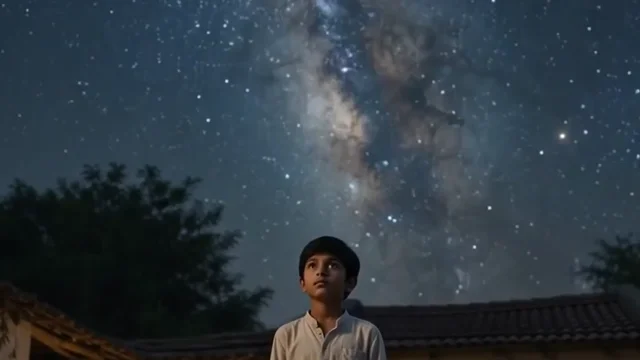
The story of a real Indian space company, from a boy looking at the stars to an orbital launch.
Open in the showcase
Title-to-video, or a documentary you can stand behind
Both are fast. Only one lets you see where each claim came from before it is narrated to an audience.
- The script is written in one pass, with no research you can read.
- Stock or generic pictures are laid over the voice afterwards.
- A wrong fact means making the whole video again.
- You read the research and approve the script before anything is generated.
- Each shot is planned for the line it illustrates.
- You re-make one scene and the rest stays locked.
Going deeper: what a controllable AI director is, building a faceless YouTube series with one visual identity, and making a short film with AI.
Accuracy and disclosure
AI-made documentaries have earned a bad name, mostly from channels that invent cases and present generated footage as real. A documentary that lasts does the opposite.
- Check every claim you narrate. AI research can be wrong, and the approval step is there so you can catch it.
- Say that the pictures are generated reconstructions. YouTube asks creators to disclose realistic altered or synthetic content.
- Do not put realistic generated faces on real victims, suspects or bystanders. Use narration, maps, documents and places instead.
- Make each video worth watching on its own. Platforms do not reward mass-produced, repetitive uploads.
Research and the script are free. Pay only for what is generated.
Research, the concept, the script and every revision cost nothing. Credits are used only when a voice, image, music track or clip is generated, and you see each cost before you confirm.
- 120 free credits
- No card required
- Credits never expire
Questions
Software that researches a real subject, writes a narrated script from what it found, and generates the pictures, voice and music to match. In RizzGen the order is fixed: research first, then the script you approve, then narration, then the pictures, so the visuals follow the facts rather than the other way round.
Yes. There is no need for an on-camera host: a narrator carries the story over generated scenes, maps, diagrams and on-screen text. You can keep the same look, voice and recurring characters across a whole series of episodes, because RizzGen remembers them between projects.
Rizzi researches the topic before writing and shows you what it found, but AI research can be wrong. Check the claims that matter against their sources before you approve the script. Nothing is generated until you do, and a wrong line can be fixed later without remaking the whole video.
Yes, with care. Real cases involve real people, so tell the story with narration, maps, documents and places, and do not put realistic generated faces on real victims, suspects or bystanders. Say that the pictures are generated reconstructions; YouTube asks creators to disclose realistic altered or synthetic content.
Narration voices in many languages, including Hindi and other Indian languages. You hear and choose the voice before the pictures are made, and each shot is timed to the line it illustrates.
Research, the concept, the script and every revision are free, and new accounts get 120 free credits with no card. Credits are used only when a voice, image, music track or clip is generated, and RizzGen shows the cost of each before you confirm. Credits never expire and there is no subscription.
Start your documentary.
Name the subject. Rizzi researches it first, and nothing renders until you approve the script.
Research and planning are free. 120 free credits, no card required.